Correction: An earlier version of this post misrepresented when violence can be used. This has now been corrected.
The Non-Aggression Principle (NAP) is often mentioned in Libertarian communities, but rarely defined in a way that makes sense to outsiders. Most of the important Libertarian websites, such as Mises Institutes, have no introductory articles with names like “What is NAP?” or “Introduction to NAP”. Instead, individual Libertarians either offer explanations that require a lot of previous knowledge, or recommend entire books*.
It’s a puzzling situation to have such a foundational topic so poorly covered when it’s such an essential part of the Libertarian ethical system — to the degree that rejecting it makes you no longer Libertarian.
For this reason, I decided to write this brief explanation, to the best of my current understanding.
What is NAP?
The Non-Aggression Principle (NAP) states that you cannot initiate the use of violence against others in an attempt to control or damage their property.
What is Aggression?
In the name, it’s called the non-aggression principle, not the non-violence principle. So what did I define it as being unable to initiate the use violence against others in an attempt to control or damage their property?
That’s because in the libertarian context, aggression is the initiation of the use of violence to try to control or damage someone else’s property. Aggression has many different forms, some more obvious and direct than others.
A classic example of obvious and direct aggression would be if you walk down a street and a complete stranger threatens you with a knife in order to gain control of the money in your wallet (which is part of your property). However, since the stranger initiated the violence, you have the right to respond in kind to defend yourself.
An example of indirect, non-obvious force would be taxation. Taxation is when the government decides it would like some of your money (which is part of your property), and paying them is not optional. If you fail to give the amount they want whenever they ask for it, they can use physical force (police with guns) to harass, arrest, and imprison you.
NAP forbids all aggression: direct and indirect, obvious and non-obvious.
Does this mean Libertarians are pacifists?
Following and advocating for NAP doesn’t make a person a pacifist because NAP doesn’t forbid violence itself, only aggression — the initiation of violence used to control or damage someone else’s property. If someone else has initiated violence, you can always use violence to defend yourself and your property.
What is Property?
If you can’t initiate violence in an attempt to control other people’s property, then it’s essential to know what counts as property.
Property means total control. When you own property, any kind of property, you have complete control over how and when it is used. No one can tell you how or when to use it, except if that use is aggression.
We own our bodies. Our first and most important possession is our bodies. No matter our circumstances, we always retain final and total control over our own bodies.
When you mix labor with nature, it becomes your property. Suppose you go into nature, traveling on land owned by no one. You pick up some palm fronds and create a hat from them. That hat is now your property, and you have complete control over it.
When property exists, it can only be voluntarily transferred. After you have created your palm frond hat, the only way another person can own it is if you give it to them, or you participate in voluntary exchange.
Conclusion
In conclusion, the Non-Aggression Principle (NAP) forbids aggression, which is the initiation of the use of violence to control or damage the property of another person. Your property includes your own body, things you create from nature with your own labor, or things which you purchase or are gifted. However, NAP doesn’t mean Libertarians are pacifists, since they can use violence to defend themselves and their property from acts of aggression.
Notes and Comments
It is a huge failing of the libertarian community that they are so quick to recommend entire books to beginners. It is a huge barrier to entry, especially since the books recommended are in a style unfamiliar to the majority of interested people.
This article initially omitted the concept of initiation of violence being forbidden, leading to a confusing discussion. The article has been updated to make things clearer.
The “end of history” is the idea that humanity has finished developing, that society and morality cannot improve in any dramatic or meaningful way. This damnable lie stifles curiosity and innovation, hamstringing efforts to bring Western Civilization into a new era.
I view libertarianism as an essential step in moving beyond the current system, into something that is more compatible with the technologies we have today. For this reason, I often have discussions with my husband Stefano about what a libertarian future might look like, and how it might function.
Personally, I am conservative rather than a Libertarian, which means I find government extremely valuable. This drives me to hunt for governmental structures that might be compatible with libertarian ethics.
I have come to believe that the Mormon Church (hereafter “the Church”) is a valid model for a libertarian-compatible government organization. Stefano wasn’t convinced, because not only do they lack a monopoly on force, they lack force completely.
However, I counter that the Church is a voluntary structure with citizenship, bureaucracy, taxation, welfare, and a judicial system. In this article I will argue that the Mormon Church is sufficiently complex to warrant being called a government, and that the lack of monopoly is the very reason it can be considered voluntary.
Church Membership is Voluntary, Without Monopoly.
People choose freely if they will join the Church. There is not and never has been a government that has forced conversion to the Mormon Church. There is no infant baptism, and even children have a say in whether they become baptized or not.
The Church is competitive. The Church exists everywhere around the globe, and faces many competitors of all kinds: restorationists, protestants, Catholics, Muslims, and many other faiths both old and new. Additionally, it is also in competition with fraternal orders, unions, and similar organizations.
There is a formal process for leaving. Unlike many Churches, where you simply stop attending when you are no longer interested in membership, the Mormon Church has a well-defined process for ending your membership — severing both your obligations and benefits.
The Church has a Government
The Church has a defined head. The President of the Church acts as a head of state, meeting with representatives of various nations and religions. He is chosen by the unanimous vote of a council, somewhat analogous to the election of the Pope by the College of Cardinals.
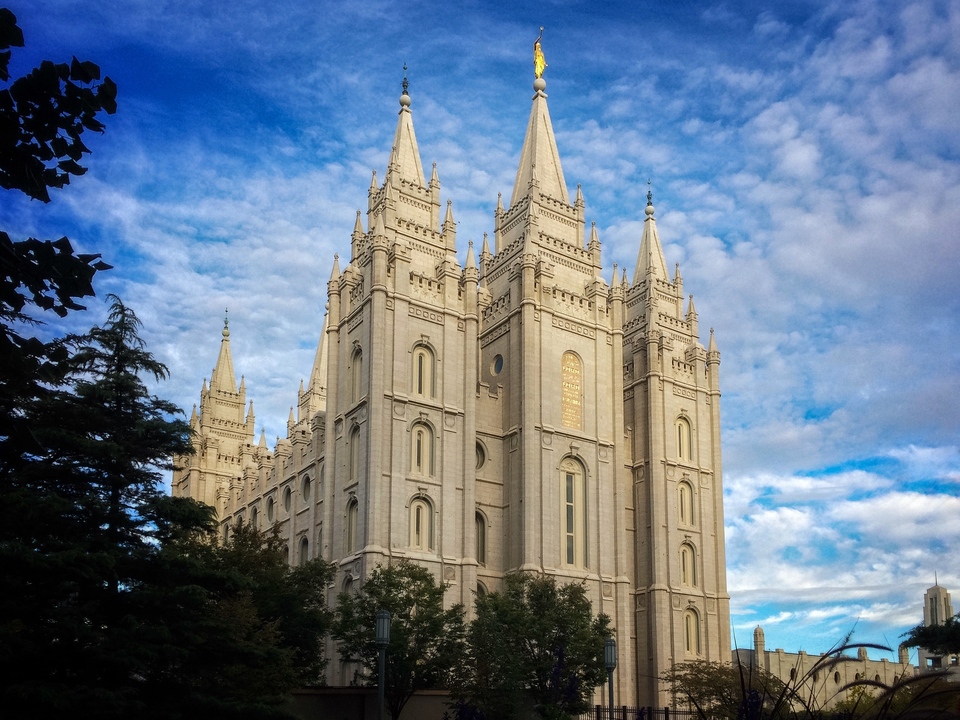
The Church has a capitol. Since the early days of the Church, it has had a capitol in Salt Lake City, Utah. This seat of government houses most if not all major governmental apparatuses, as is common for capitol cities such as DC or Austin, Texas.
The Church has a well-developed federal system. Though the system could more accurately be described as a “devolutionary system”, in practice the Church has a federated government. Power flows down from the President of the Church into Areas, then Missions, then further smaller units as needed. Each of these levels has its own leadership which has real decision making power.
The Church creates laws. The Church has a series of laws which members are expected to follow, called by various names such as: commandments, doctrines, covenants, and official declarations. In addition, each level of government can issue its own binding declarations to those within its borders. These are announced and become binding during yearly conferences.
The Church has national service. All military aged men are expected to serve 2 years, and similarly aged women have the option to serve for 18 months. While they do not engage in physical warfare, they undergo basic training before being stationed in various locations worldwide, and make efforts to increase membership.
Membership is Analogous to Citizenship
Members have ID numbers. In order to identify them for the purposes of taxation, justice, and access to various services, citizens are issued identification numbers.
Membership confers benefits. When members are in good standing, having paid all of their taxes, participating in civic meetings, and without pending judicial proceedings, they have access to a large variety of services not available to non-members. This includes access to the welfare system, and the ability to participate in Church government.
Dual citizenship is forbidden. While the Mormon Church does have competition in the form of other religions, and members are free to leave, they only allow membership in one church at a time, and some other types of organizations are also forbidden. Gaining membership at another church is considered to be relinquishment your current membership.
Taxation is Voluntary.
The Church has a flat tax system. All members of the Church are expected to pay a flat tax of 10% per year, which is called a tithe. Like all taxes, these fund the programs of the Church.
The Church tax system is voluntary. There are no auditors which check to determine if you have paid your full tax (at least for rank-and-file membership), and no use of force if you have not. Instead, you give a statement at the end of the year stating if you paid in full or not, based on the honor system.
The Church Has a Bureaucracy
The Church is split into various departments. These departments, such as licensure, taxation, welfare, and so on, operate on a federated system as well, each level with its own leadership.
The Church has a system of vital records. The Church maintains voluntary records of membership, birth, marriage, and death, among many other things.
Social Security Number. All members of the Church are given an identification number used when registering your address, recording a marriage, or accessing Church welfare.
Identification Cards. Members in good standing with the Church are issued identification cards called “temple recommends” which allow their bearers access to the full range of government services and nearly all government buildings.
Licenses. The Church issues various licenses and qualifications to members, based on a number of factors. These can include the ability to perform marriages, care for the sick, or participate in national service.
The Church performs marriages. The Church provides licenses to marry either in a private religious ceremony at a temple, or a public ceremony. These marriages are binding, and polygamy is forbidden. The Church also provides annulments and divorces.
The Church Creates Infrastructure
The Church builds general infrastructure. Using money from taxes, the Church builds various buildings and roads for the use of their citizens.
The Church has communication infrastructure. Until quite recently, the Church had a well developed internal postal system which reached all of its territories. It has also created a satellite system that extends into much of the world to broadcast news.
The Church creates and distributes news. The Church sponsors the creation of various talks, broadcasts, magazines and so on. These publications inform members of the latest updates on members worldwide as well as legal and governmental changes.
The Church provides free, public education. The Church operates degree granting institutions that operate at the secondary and post-secondary level worldwide. These qualifications are recognized internationally and suitable for getting certain types of work visas (missionary visas). Additionally, it provides continuing education for adults at each of its civic centers.
The Church has a Welfare System
The Church has a needs-based welfare system. Members in good standing can receive temporary needs-based assistance paid for by the voluntary taxation system.
The Church provides job training. As part of the welfare system, the Church provides job training to help members stay off of welfare, and if they find themselves on it, to get off as quickly as possible without damaging their quality of life.
The Church provides humanitarian relief. The Church has a long history of disaster preparedness. It used its stockpiles to provide humanitarian relief during the Great Depression and the Second World War. It continues to provide aid to areas effected by flooding, storms, and famine.
The Church has a Limited Judicial System
The Church has a system of courts. Within the church, there is a mechanism for creating a binding court, which adjudicates matters related to Church licensure and citizenship.
Church courts use a panel of judges. Within the Church, there are no jury trials. Instead, a panel of judges is selected, and their decisions are considered binding, though there is a court of appeals.
The Church Lacks Some Typical Services
The Church lacks the production of security. The Church does not have the ability to use force to enforce its decisions. As such, the most serious penalty it can pass is revocation of citizenship.
The Church does not have a health care system. Unlike many modern governments, the Church does not have a universal healthcare system. It does not, to my knowledge, fully run any hospitals or any total coverage healthcare insurance, free-at-use.
The Church lacks a pension system. To my knowledge, there are no retirement funds or pension systems for general membership of the Church.
The Church lacks a unified currency or banking system. Unlike most countries, the Church lacks any form of banking, including a central bank, and does not issue or universally accept any currency.
The Church is not democratic. The interior structure of the Church is hierarchical, without any “true” democratic systems. Members do not vote for new leaders, but instead give a vote of confidence every year for their current leaders. Votes of no confidence are rare and require validation, but taken very seriously.
In Conclusion
While the Mormon Church lacks some typical features of modern governments, it has a system of integrated systems typically associated with government. Its lack of monopoly is one of the largest differences from modern governments, but this lack of monopoly is the exact feature required to make it a truly voluntary government.
As a conservative, one of its most important features is that it currently exists, and has existed for well over 100 years and still functions well. This kind of concrete example is essential for showing that it is a plausible system of government.
The ability to show functioning systems that replace a great portion of the functions of a government, while remaining compatible with libertarian ethics is essential. It allows average citizens to take the movement more seriously, and is a foundation for building a larger understanding that there is no “end to history”, stagnation is not inevitable, and that Western Civilization can still improve with effort and experimentation.
I welcome any critiques or extensions of this concept.

 A Last Call to Arms